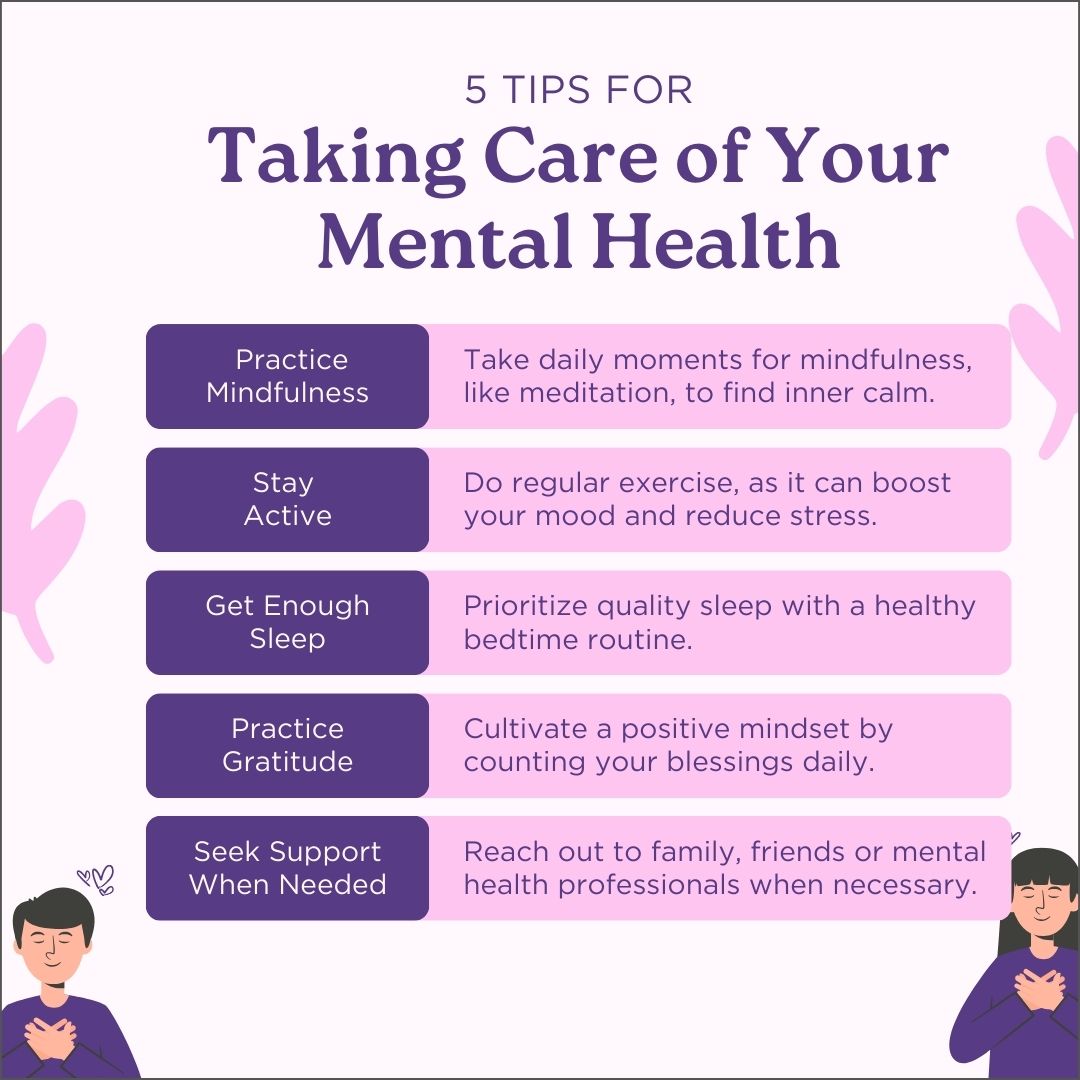

IMAGE: Mental Health Tips for a Balanced and Happy Life

Top 10 Mental Health Tips for a Balanced and Happy Life
Mental health is an essential component of overall well-being, influencing how we think, feel, and act. It affects our ability to handle stress, relate to others, and make decisions. While mental health challenges can be complex, there are practical steps you can take daily to support your psychological well-being. Here are ten effective mental health tips that can help you lead a more balanced and happy life.
1. Wake Up Without Your Phone
Starting your day with your phone in hand can flood your brain with information and distractions before you’ve had a chance to center yourself. According to research from the University of British Columbia, frequent email checking increases stress levels throughout the day. Instead, try keeping your phone out of reach overnight and using a traditional alarm clock. Give yourself at least 15-30 minutes of screen-free time in the morning to set a positive tone for the day.
2. Get Morning Light Exposure

Exposure to natural light within the first hour of waking helps regulate your circadian rhythm, which impacts sleep quality, mood, and energy levels. Stanford neuroscientist Andrew Huberman emphasizes that morning sunlight exposure is one of the most impactful things you can do for mental health. Spend 10-15 minutes outside in the morning light, whether it’s walking the dog, sipping coffee on the porch, or simply standing by a window. Even on cloudy days, natural light is brighter than indoor lighting.
3. Set a Daily Intention
Before diving into tasks, take one minute to set an intention for the day. This isn’t a to-do list — it’s a quality of being you want to bring to whatever happens. Examples include, “Today I will be patient with myself” or “Today I will focus on one thing at a time.” Setting intentions helps align your mindset with your goals and fosters a sense of purpose.
4. Move Your Body for 30 Minutes
Exercise is one of the most powerful antidepressants known to science. A meta-analysis published in the British Journal of Sports Medicine found that exercise was 1.5 times more effective than medication or cognitive behavioral therapy for reducing symptoms of depression, anxiety, and psychological distress. You don’t need intense workouts — even walking, yoga, or dancing counts. The key is consistency and choosing movement you actually enjoy.
5. Prioritize Sleep Quality
Sleep is when your brain processes emotions, consolidates memories, and clears metabolic waste. Chronic sleep deprivation is strongly linked to depression, anxiety, irritability, and impaired decision-making. To improve sleep quality, keep a consistent wake time, avoid caffeine after early afternoon, dim lights before bed, and keep your bedroom cool. Avoid screens in the last hour before sleep, or use blue-light filters.
6. Nourish Your Gut
The gut-brain connection is one of the most exciting areas of mental health research. Your gut produces about 95% of your body’s serotonin and communicates constantly with your brain via the vagus nerve. A diet rich in diverse fiber, fermented foods, and whole plants supports a healthy gut microbiome, which supports mental health. Include fermented foods like yogurt, kimchi, or sauerkraut in your meals and minimize ultra-processed foods.
7. Connect with One Person Meaningfully
Social connection is a fundamental human need. Loneliness is as harmful to health as smoking 15 cigarettes a day, according to research by Julianne Holt-Lunstad. Make an effort to have at least one meaningful interaction per day. Call a friend instead of texting, have a real conversation with a family member, or make eye contact with a colleague and ask how they’re really doing.
8. Practice Gratitude
Gratitude isn’t just positive thinking — it’s a well-researched intervention that rewires your brain’s negativity bias. A UC Davis study by Robert Emmons found that people who wrote down three things they were grateful for each week were 25% happier. Make it specific: instead of “I’m grateful for my family,” try “I’m grateful my partner made me laugh during dinner tonight.”
9. Set Boundaries
Saying yes to everything leads to burnout, resentment, and anxiety. Healthy boundaries protect your energy and signal self-respect. Before agreeing to a request, pause and ask yourself: “Do I have the capacity for this? Does this align with my values and priorities?” It’s okay to say, “I appreciate you thinking of me, but I can’t take that on right now.”
10. Create a Worry Window
If you tend to ruminate, designate 15 minutes in the early evening as your “worry time.” During this window, write down everything that’s on your mind. Outside this window, when worries arise, tell yourself, “I’ll address that during worry time.” Research shows this technique reduces overall rumination and improves sleep.
By incorporating these mental health tips into your daily routine, you can build resilience, reduce stress, and enhance your overall well-being. Remember, mental health is not fixed — it’s built, one habit at a time.