

The Ultimate Guide to Effective Grounding Techniques for Mental Wellness
Mental wellness is an essential part of our overall health, and in today’s fast-paced world, it’s easy to feel overwhelmed by stress, anxiety, or negative thoughts. Grounding techniques offer a powerful way to reconnect with the present moment, helping you manage difficult emotions and regain a sense of control. These strategies are not only effective but also accessible, requiring no special equipment or training. In this article, we will explore various grounding techniques that can be used to improve mental well-being.
What Are Grounding Techniques?
Grounding techniques are simple yet effective strategies that help you stay connected to the present moment. They work by focusing your attention on sensory experiences, physical sensations, or mental exercises, which can help reduce anxiety, panic attacks, and other distressing feelings. These techniques are particularly useful when you’re feeling overwhelmed, anxious, or disconnected from reality.
Benefits of Grounding Techniques
- Reduces Anxiety and Stress: By focusing on the present, grounding techniques can help lower stress levels and reduce the intensity of anxiety.
- Improves Focus and Clarity: These techniques help you refocus your mind, making it easier to think clearly and make decisions.
- Enhances Emotional Regulation: Grounding techniques can help you manage strong emotions, preventing them from spiraling out of control.
- Promotes Relaxation: Many grounding techniques involve deep breathing or physical movements that can induce a state of relaxation.
Common Grounding Techniques
1. Sensory Grounding Exercises
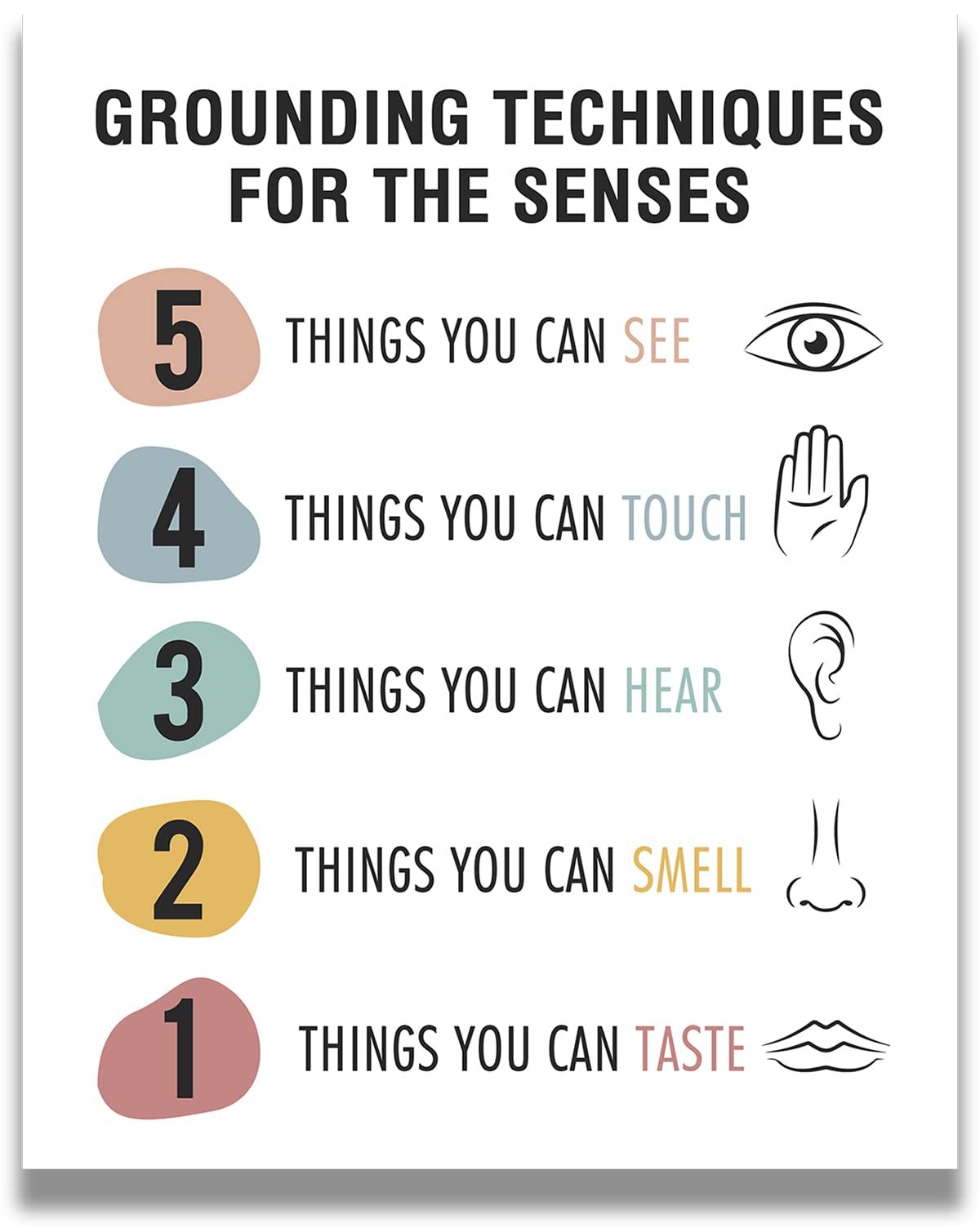
The 5-4-3-2-1 Technique: This technique involves identifying five things you can see, four things you can touch, three things you can hear, two things you can smell, and one thing you can taste. This exercise helps you focus on your surroundings and bring your attention back to the present.
The 3-3-3 Exercise: Name one thing you hear, one thing you see, and one thing you feel/touch. Repeat this process two more times. This technique is great for quick relief during moments of stress.
2. Cognitive Grounding Exercises
Cognitive Reorientation: Ask yourself questions like “Where am I?” or “What is today?” This helps you reorient yourself in time and space, providing a sense of stability.
Creating a Safe Place: Imagine a place where you feel calm and safe. This could be a real location or an imaginary one. Visualizing this place can help you feel more grounded and secure.
3. Physical Grounding Exercises
Tracing Hand Exercise: Trace your hand on a piece of paper and label each finger with a sense (sight, sound, smell, etc.). This exercise helps you connect with your senses and can be used as a reminder during moments of distress.
Grounding the Body: Sit on a chair and focus on the feeling of your feet on the ground. Stamp your feet slowly, then move your attention to your spine and hands. This exercise helps you reconnect with your body and the present moment.
The Hug: A simple exercise where you place your hands on your shoulders and repeat a positive affirmation. This technique combines physical touch with positive self-talk to promote feelings of safety and strength.
4. Soothing Grounding Techniques
Deep Breathing: Focus on your breath, noticing the sensation of air entering and leaving your body. This can help calm your nervous system and bring you back to the present.
Creative Activities: Engaging in creative activities like coloring, drawing, or listening to music can help distract your mind and provide a sense of calm.
Connecting with Nature: Spending time in nature, such as walking barefoot on grass or sand, can have a grounding effect. The physical connection with the earth can help you feel more centered.
Tips for Using Grounding Techniques
- Practice Regularly: The more you practice, the more effective these techniques become. Make them a part of your daily routine.
- Experiment with Different Techniques: Everyone is different, so try various methods to find what works best for you.
- Use Them Proactively: Don’t wait until you’re overwhelmed. Use grounding techniques at the first sign of stress or anxiety.
- Combine Techniques: Sometimes, using a combination of mental, physical, and soothing techniques can be more effective than using just one.
When to Seek Professional Help
While grounding techniques are valuable tools for managing anxiety and stress, they are not a substitute for professional help. If you experience regular anxiety attacks, dissociation, or other mental health issues, consider seeking the guidance of a therapist or counselor. They can provide personalized support and additional coping strategies.
In conclusion, grounding techniques are a powerful way to enhance mental wellness and manage difficult emotions. By incorporating these strategies into your life, you can develop a stronger connection to the present moment and improve your overall well-being. Whether you’re dealing with everyday stress or more severe anxiety, there’s a grounding technique that can help you feel more grounded and in control.